Is there a best season to write within? The answer is, well… no, not really; every writer is different and everyone has different preferences. Do you like writing in the heat of a beautiful, summer’s day? Or do you prefer the fresh buds of spring to accompany your writing? What about a warm, cosy fire next to you as you write in the winter? Maybe the shifting of the colours into autumn is what inspires you best? Everyone is different, inspired by different things and different settings, and the seasons might be a big part of your inspiration as a writer, and they might not be too.
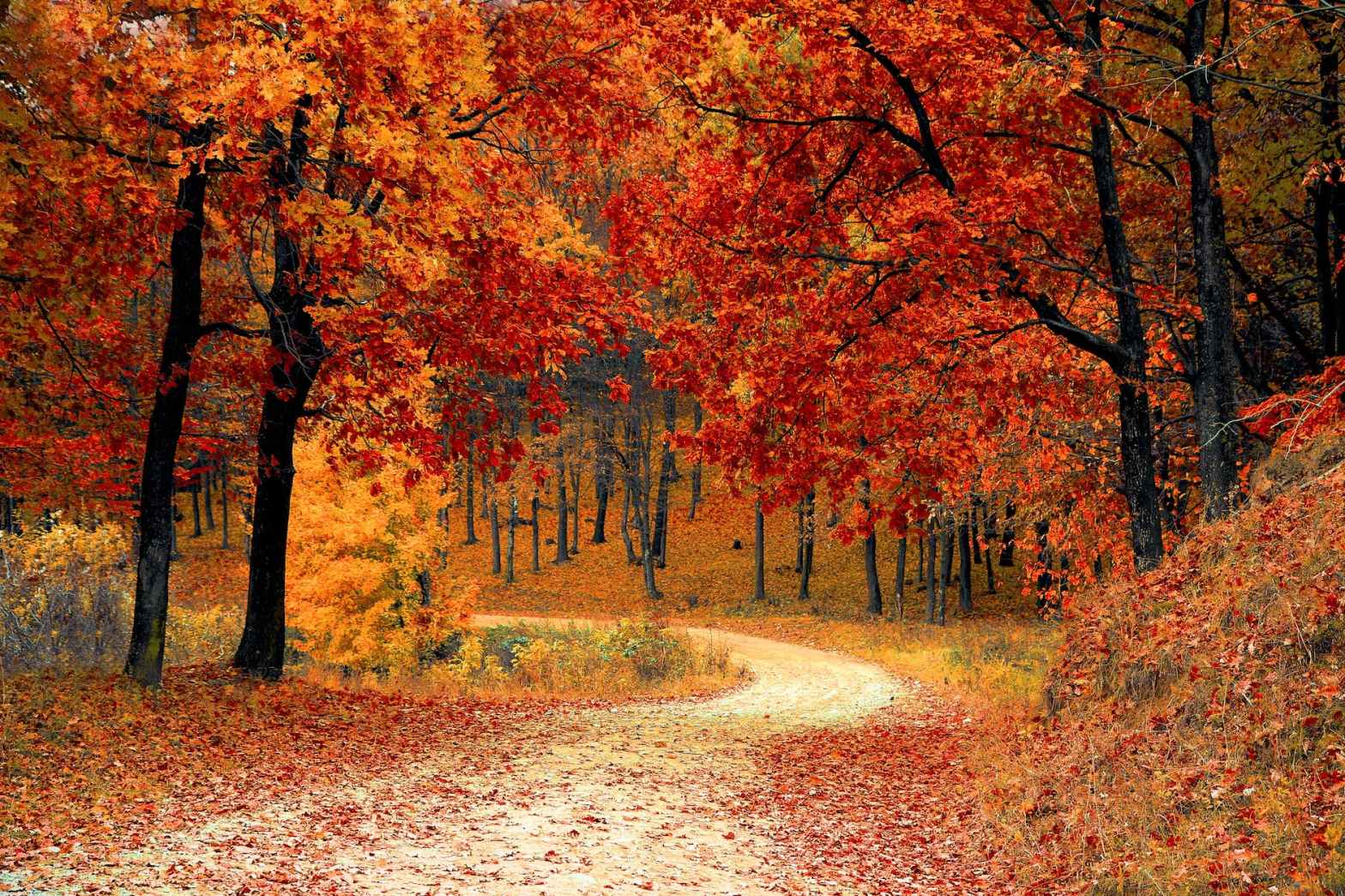
There is something about autumn though, isn’t there? About that shift from heat to warmth to cool, about sunny, breezy days, the colours in the leaves before they drop to decorate the earth. All that visible change, more bearable temperatures, a cooler sky; it’s my personal belief that there is something brilliant about writing in autumn.
The seasons play a big part when it comes to my creativity, whether that’s writing about the seasons in my stories or how the seasons affect my writing. In terms of writing about the seasons, it’s something I absolutely always cover in every project I’ve ever done, the seasons always play their part somewhere. I couldn’t imagine ever writing and not including the seasons, the weather, the sky; exploring settings and where they fall in particular seasons is a massive part of the stories I write because of how much they can aid the story I’m trying to tell. There is beauty in every season and I love exploring that and what it means for the story and the characters within that story, what interpretations a season can add.
There are, of course, the typical interpretations of the seasons, how we often personify them, what metaphors they offer, the pathetic fallacy of it all. Spring is new beginnings, summer is passion, autumn is change, winter is death or struggle. Those interpretations exist for a reason and they’re so ingrained into writing and reading alike because of how much the seasons affect our real lives and, thus, characters’ lives too. There are all these interpretations of what the seasons might mean when it comes to stories because the seasons can be such an important backdrop for what’s going on in the plot. As writers and readers, we can connect the weather to what the characters are going through, we can analyse the seasons to tell us more about a character’s inner thoughts or where they might be on their arc, the seasons can offer a subtlety when it comes to an analysis of a piece of writing; there is a reason that settings and the weather are a massive part of studying literature.
But what about other interpretations? What about winter being new beginnings, what about summer being anger and frustration, what about spring being a signal for change coming too soon, what about autumn being about balance? There are the tried and tested interpretations, and then there’s ways to spin it to make the seasons work for your story, to make them a character in their own right that offers layers to whatever story you might be writing. Seasons can work in such interesting ways for your stories, becoming key backdrops for whatever plays out within them. If you use the seasons and the weather in the right way, they give a depth to your story that makes interpretations of that story juicier, more engaging.
That being said, it can be true that sometimes a story just takes place in spring. For some writers, they put their layers in other facets of the writing, in other pieces of description, and maybe whatever season the story is set within doesn’t matter all that much to the story or the characters or any of the metaphors on offer. But if that is your intent, just be aware that once a reader gets it in their hands, they’re going to start wondering what spring means in your story, why it was set in that particular season, how it aids their interpretation. Obviously, that’s the beauty of interpretation, the beauty of making art; whatever the creator’s intentions, that doesn’t necessarily matter to a reader, they get the piece of art and they make it into their own thing. So if a reader has an interpretation for what spring means in your story but that wasn’t what you intended, well, your intentions don’t always matter, it’s a reader’s interpretation that matters to them. As long as a reader can back up what their analysis of a piece means, almost anything goes, even if, for you, spring is just spring.
Then, when we’re talking about the seasons not just within the story but how writing in different seasons affects your writing, I think there are lots of ways it can affect you. Sometimes when it’s an excruciatingly hot, summer’s day, you might find yourself impassioned to write intense love scenes or a ferocious battle. If it’s raining outside, maybe you work that into your story, pulling from what you can hear to make the scene you’re writing realistic. Better yet, maybe the scene you were writing was once bright and cheerful, but suddenly it’s dark and stormy and maybe that was just what the scene needed. I do love writing in every season because each season has its own thing to offer. Furthermore, when you build a habit out of writing, it shouldn’t necessarily be an issue when you’re writing or what time of year it might be, you should just be able to write.
But that doesn’t mean that the world around you isn’t impacting your writing in some way. Again, it will be different for every writer, everyone gets inspired by different things, everyone needs different circumstances to be able to write well, and what works for you isn’t going to be what works for everyone. You might have a set of very common needs to write well, or they might be more obscure, but what you need to write doesn’t matter, just as long as it helps you write. And maybe seeing the snow outside your window or hearing a fan whirring to cool you down is something you need. And maybe it isn’t. Maybe you love writing in the season that your story is set within because it helps you fuel its realism. And maybe you’d rather write about a lovely spring morning when you’re in the throes of winter because that’s what helps you build a sense of awe in your scenes. I don’t think there’s any way to escape the seasons when you’re writing, but everyone will let their writing be affected by them in different ways.
The seasons definitely affect my writing, and autumn is absolutely my favourite to write in. It’s when I’m the most productive, I love days where there is still plenty of daytime but the days themselves are darker, cosier. There’s a lot of beauty in the changing leaves that can offer inspiration when you get out for an autumnal stroll, and the occasional showers can be great company when you’re inside, tapping away at a keyboard or scribbling in a notebook. There’s just something about this season with its cooler days, the time for jumpers and thick socks, the cool, autumnal winds that, for me, make writing so much easier. It’s hard to put my finger on it exactly, but there’s an inspiration in this season that makes my words flow. Maybe it’s because autumn is my favourite season and perhaps those who love spring the most find spring is their most productive season. If you are someone who does find a particular season is your most productive time of year, then take advantage of that because there’s nothing like feeling productive when you’re a writer.
NaNoWriMo being in autumn (in my half of the hemisphere anyway) is perfect. Although, once again, it isn’t something I can partake in this year because of the things I’m working on, I know, when I do partake again, it’s the perfect time to get 50,000 words out. Autumn is a cosy, inspiration-filled season, and getting the bulk of a manuscript out in a month feels like it’s so much easier when it comes in autumn; if it came in summer, I don’t think I’d be able to manage it as well.
So if autumn is where you write your best, I hope your autumn is full of particularly fruitful writing sessions. And if it isn’t, that’s totally fine. I hope either you can find some inspiration to write this season or perhaps you can take a break and come back to it in a season that is more inspiring for you.
Robyn x
 R. A. Howard